

Share
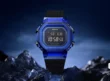
The MRG-D5000 is the result of a very expensive engineering problem: how do you make sapphire survive being a G-SHOCK?
Casio has spent years solving a problem no normal digital watch particularly needed solved: how to use sapphire crystal as part of a shock-resistant watch without making the watch less capable of taking a hit.
The result is the MRG-D5000 Blue Sapphire, announced on October 1 and limited to 20 pieces worldwide. Casio’s U.S. site lists the MRG-D5000 at $80,000, while Casio Japan lists a December 2026 release and an MSRP of ¥11,000,000 including tax.
Yes, $80,000 for a square digital G-SHOCK.
The price makes more sense once you look at what Casio actually had to engineer.
Sapphire is familiar in expensive watches as the transparent crystal over a dial. Here, Casio pushed it into the bezel and outer-case structure itself. The company says the MRG-D5000 is its first G-SHOCK to achieve a shock-resistant construction using blue sapphire crystal components.
That created a very G-SHOCK-specific problem. Casio says screw holes and other details can create cracking risks in sapphire, so the engineers moved away from a conventional one-piece approach. The resulting Multi-Guard Structure divides the bezel and case into separate components and assembles them without the screws that could compromise the material.
The idea also draws on kigumi, the Japanese tradition of interlocking timber construction without nails.
In other words, the luxury material was not simply added on top. Casio had to redesign the architecture around it.
The watch then leans all the way into the contrast. The face uses pure 24k-gold lettering. Blue sapphire components sit alongside a grade-5 titanium case back and titanium clasp, while the strap is Dura Soft rubber with the familiar G-SHOCK brick motif. Each of the 20 watches gets its own serial number.
Casio’s U.S. site is not presenting this as a normal add-to-cart release. Interested buyers can register for an opportunity to purchase, and the company is explicit that registration does not guarantee selection. Final eligibility, timing and purchase terms remain subject to the official rules.
That may be the most useful way to understand the MRG-D5000.
This is not an $80,000 G-SHOCK because Casio suddenly discovered a more complicated way to display the time. It is an eleven-million-yen G-SHOCK because the company chose a material that fights the brand’s central promise, then spent years engineering its way around that contradiction.
The result is part watch, part materials experiment and part luxury-object flex.
At 20 pieces worldwide, Casio does not need a mass-market argument. It only needs a microscopic audience to think making a sapphire G-SHOCK was worth doing.
Hero image: Casio

