

Share

The new Range Rover Sport Electric is now available to order. Range Rover’s current UK product page lists up to 378 miles of estimated WLTP range, 550PS and 850Nm of torque. The larger full-size Range Rover Electric offers 372 miles of WLTP range and the same 550PS and 850Nm.
The estimated real-world range is even stranger: Range Rover lists both at up to 333 miles.
Then there is the price.
Range Rover lists the Sport Electric from £109,810 OTR and the full-size Range Rover Electric from £154,070 OTR.
That is a £44,260 starting-price gap.
The comparison is not perfectly trim-for-trim: the £109,810 Sport is a Dynamic SE, while the £154,070 Range Rover Electric starts in Autobiography specification. A Sport Electric Autobiography starts at £122,780, narrowing the same-name trim gap to £31,290.
So what, exactly, is the extra money buying?
| Range Rover Sport Electric | Range Rover Electric | |
|---|---|---|
| UK starting price | £109,810* | £154,070 OTR |
| WLTP range | Up to 378 miles** | Up to 372 miles |
| Estimated real-world range | Up to 333 miles | Up to 333 miles |
| Peak output | Up to 550PS | 550PS |
| Peak torque | 850Nm | 850Nm |
| 10–80% rapid charge | From 22 min | From 22 min |
| Range added in 10 min | Up to 136 miles | Up to 136 miles |
*UK prices checked October 1, 2026. Range Rover lists the Sport Electric from £109,810 OTR and the Range Rover Electric from £154,070 OTR.
**Sport figures are manufacturer estimates pending final certification; JLR’s September 30 launch release quoted 374 miles.
On the numbers most EV shoppers notice first, the Sport does not look like the cheaper compromise.
It actually carries a slightly higher maximum range figure on Range Rover’s current UK product page, matches the flagship’s estimated real-world range, and uses the same headline power and torque figures. Both also quote the same minimum 10–80% rapid-charging time and the same maximum 10-minute range top-up.
The Sport is not merely the budget version with a smaller battery and a slower charger.
Its pitch is different.
Range Rover describes the Sport Electric around dynamism: a lower centre of gravity, faster torque response, active chassis technology and a 4.3-second 0–60 mph time in Dynamic Launch Mode. It still claims the useful Range Rover party tricks, including up to 900mm of wading depth and 2.5-tonne towing.
The full-size Range Rover Electric is selling something less spreadsheet-friendly.
Range Rover calls it the quietest Range Rover yet and frames the cabin as a “sanctuary of calm.” It is the flagship body, the flagship interior proposition and the more formal expression of the brand.
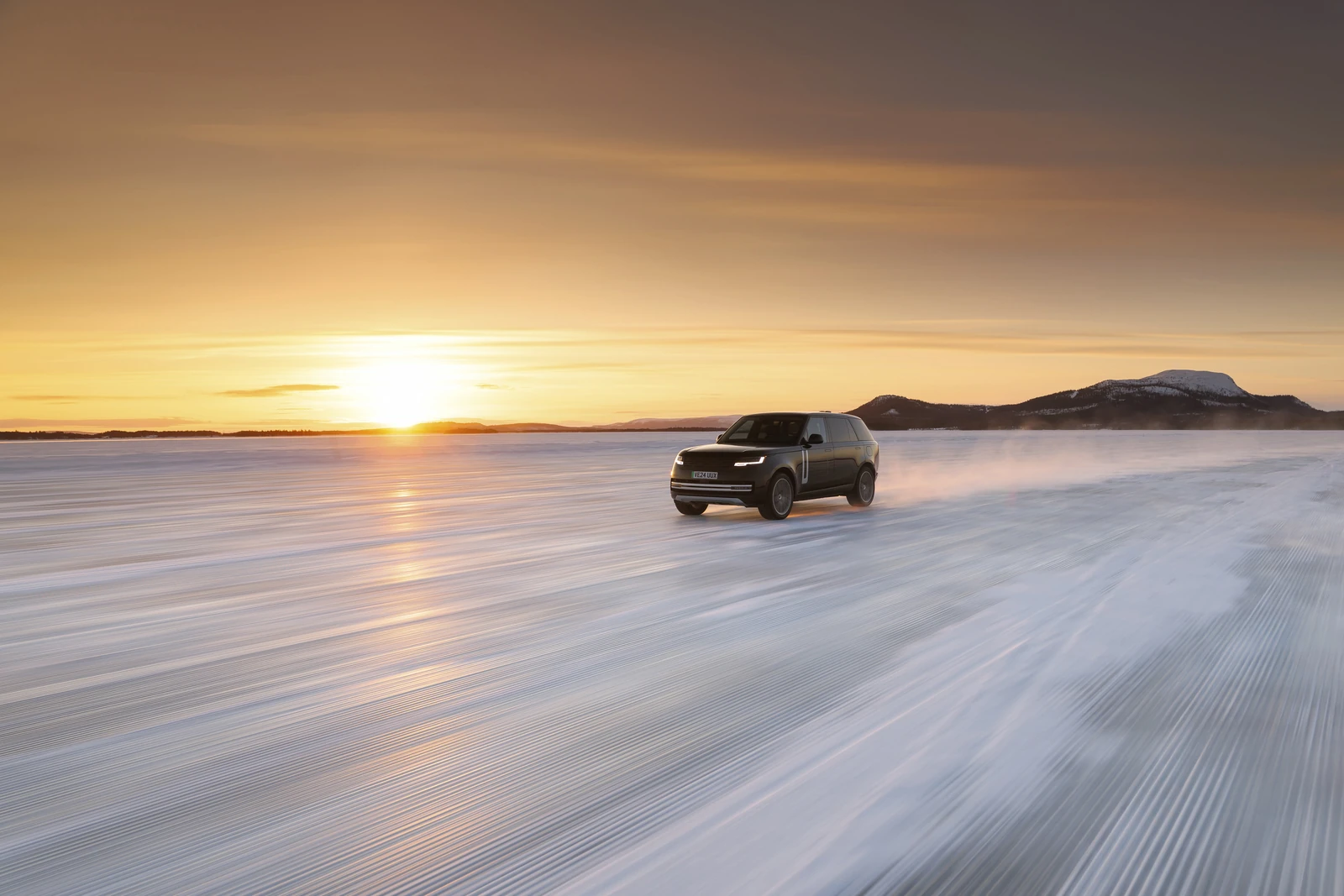
That may be exactly what some buyers are paying for. Luxury has never been required to make sense on a range-per-pound basis.
But the comparison is unusually revealing because the £44,260 gap is not buying materially more headline electric range, torque or charging speed.
It is buying the distinction between Range Rover Sport and Range Rover itself, plus a different starting trim.
For a buyer who wants the largest, calmest, most traditionally flagship version of the experience, that distinction may be the point.
For someone primarily buying the electric powertrain, capability and performance numbers, the Sport Electric suddenly makes the larger car’s premium much harder to explain with a spec sheet alone.
And that is probably the most interesting thing about Range Rover’s newest EV: it is not just competing with Porsche, BMW or Mercedes-Benz.
It is competing rather effectively with the Range Rover parked one line above it.
Hero image: Jaguar Land Rover