
Luxury Hotel Merch Is Becoming a Brand Strategy, Not Just a Souvenir

Share

The luxury-hotel gift shop used to have a fairly clear job. Sell the robe. Sell the slippers. Maybe add a logo mug for the person who enjoyed the minibar enough to want documentary evidence. That category has become much harder to recognize.
Mandarin Oriental Bangkok has released a limited Sporty & Rich capsule tied to the hotel’s 150th anniversary. The Setai has developed apparel and body products around its Twin Palms identity. Marriott now sells hotel-inspired furniture, lighting, art and tabletop pieces through a dedicated Design Shop. Meanwhile, resort boutiques are becoming increasingly meaningful places for fashion brands to sell collections of their own.
“Hotel merch” now covers several different businesses wearing the same bathrobe. Luxury hotel retail now spans at least four distinct models: products tied to the stay, branded fashion collaborations, third-party fashion sold through hotel boutiques and homeware designed to extend the hospitality brand into everyday life. Taken together, they show why hotel merch is increasingly functioning as a brand strategy rather than a souvenir category. The useful question is not whether the category is fashionable. It is what, exactly, the hotel is trying to sell after you have already checked out.
Four Retail Models Are Hiding Inside the Hotel Gift Shop
The easiest way to understand the shift is to separate four models that often get bundled together.

1. The Memory Object
This is the oldest model, but it has become much more sophisticated. The guest sleeps on the bed, smells the lobby, uses the bath products and wraps up in the robe before anyone asks for a second transaction. Then the hotel sells the object.
Marriott explicitly markets bedding, fragrances and home decor as ways to bring hotel favorites home. In the U.S., eligible customers can redeem Marriott Bonvoy points on select merchandise.
The product can do something a normal retailer may struggle to reproduce. It is attached to a memory that already happened. You did not encounter the pillow as a square of fill material on a shelf. You slept on it in Maui. The fragrance was not sampled from a paper strip. It was the smell of the lobby when you arrived.
That does not make every hotel candle a great product. It gives hospitality brands an unusually powerful context in which to introduce one.
2. The Status Capsule
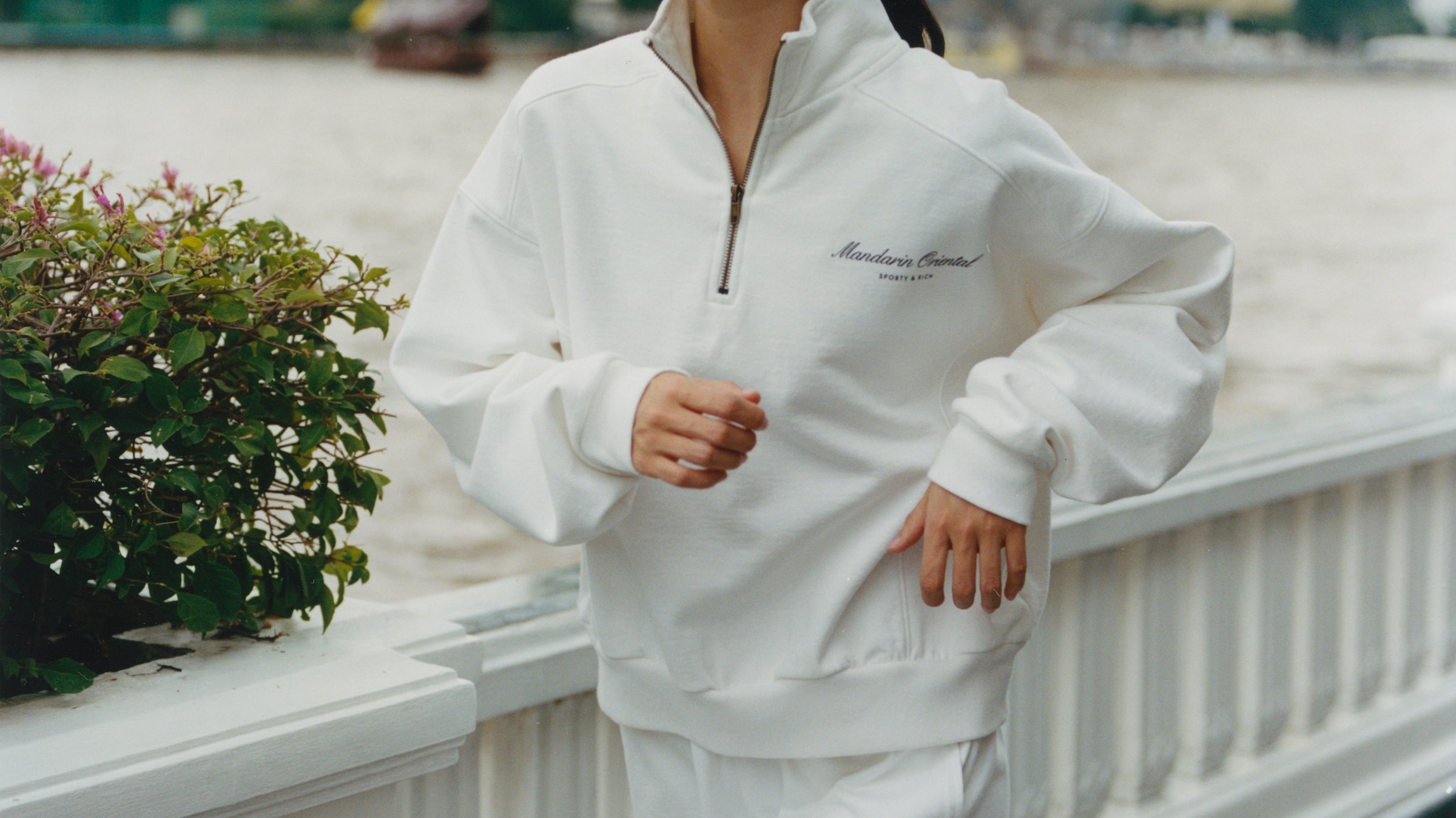
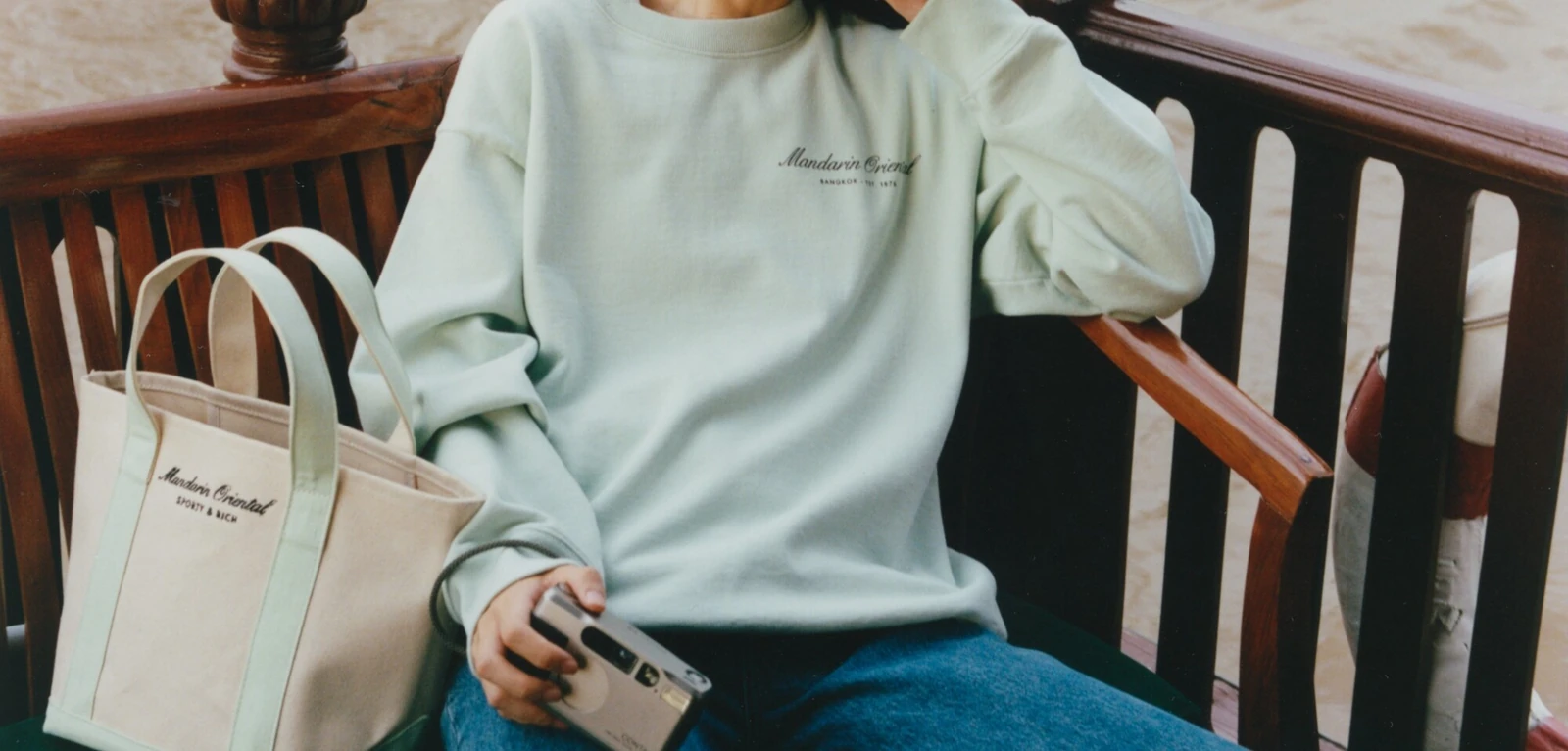
This is where hotel retail starts behaving much more like fashion. For its 150th anniversary, Mandarin Oriental Bangkok announced a Sporty & Rich capsule built around co-branded crewnecks, T-shirts, pajamas, totes and caps in the hotel’s signature celadon palette.
The planned distribution is revealing. The collection was not limited to a shelf beside reception. Mandarin Oriental said it would be sold at the Bangkok hotel, through Central Group malls, at Mandarin Oriental New York and with worldwide shipping. That is not merely a souvenir strategy. It is a fashion collaboration using the hotel as cultural material.
Other properties have explored similar territory through limited capsules and designer partnerships. Recent examples include Ritz Paris x Frame, One&Only accessories and Casa Angelina x Off-White.
The hotel name becomes wearable shorthand. For the right customer, a cap from a recognizable property can work the way a niche restaurant T-shirt or members-club tote works: not loud luxury, but a small signal to people who know what the reference means. The more specific the reference, the better the signal.
3. The Hotel as Fashion Stockist
This is related, but economically and editorially different. A luxury hotel boutique can sell fashion without the hotel owning the product at all. Vogue Business has documented the growing role of hotel and resort boutiques as fashion distribution channels, particularly for localized assortments and limited collections.
That makes sense. Luxury hotels already concentrate the affluent traveler many brands want: someone temporarily removed from a normal shopping routine, often in a leisure mindset and physically inside a curated environment. The boutique can become a discovery channel.
But this should not be confused with hotel merchandise. If a resort shop stocks an independent designer, the hotel is functioning as a retailer and curator. If the hotel puts its own name on the sweatshirt, it is extending the hotel brand itself. Those are different jobs.
4. The Lifestyle System
Then there is the most ambitious model: the hotel wants to move into your house. Marriott’s current Design Shop goes well beyond bedding. Its collections include hotel- and destination-inspired furniture, lighting, art, tabletop pieces and decorative objects, including lines connected to W Hotels and Westin Hotels & Resorts.
This is hospitality retail as interior identity. Instead of asking, “Would you like the robe from room 1407?” the proposition becomes, “Would you like your home to feel a little more like this brand?” That is a much larger idea.
It also connects retail to a system the hotel company already owns: loyalty. Marriott’s ability to let eligible customers redeem Bonvoy points on select merchandise turns the object into another touchpoint inside the same customer relationship. The stay, the points balance and the nightstand can all orbit the same brand.
Why Luxury Hotels Have a Retail Advantage Fashion Brands Cannot Easily Buy
There is a reason this category has more potential than a pile of attractive logo sweatshirts. A luxury hotel can let you experience the brand before it sells you the object.
You see the materials. You smell the room. You sleep in the bed. You drink from the glassware. You spend three days inside a lighting scheme someone chose very carefully. The hotel is effectively an immersive showroom, except the customer paid to be there.
That does not guarantee a merchandise sale. It changes the starting position. A fashion label usually has to build an imagined world around an object. A hotel already has the world. The object can become a portable fragment of it.
The Best Hotel Merch Is Specific Enough to Carry the Place
This is also why generic hotel merchandise is usually the least interesting part of the category. A logo can be enough when the logo itself has strong cultural currency. More often, the pieces that feel genuinely desirable have another layer.
The color is tied to the property. The design references a room, a pool, a local motif or a piece of institutional history. A fragrance genuinely recalls the place. The collaboration makes sense for the hotel’s aesthetic rather than existing because both names look expensive in the same press release. The object is useful after the vacation ends.
Current reporting on Suvretta House is a nice small example. Business Traveller reported that the Swiss hotel’s first run of a corduroy cap sold out in two weeks. That does not prove a global hotel-merch boom. It does show what specificity can do.
A corduroy cap connected to one particular mountain hotel has more identity than a generic black baseball cap with the word “LUXURY” embroidered on it, which is probably already waiting for us somewhere in an airport.
Not Every Collaboration Means the Hotel Has Become a Fashion House
There is a temptation to turn all of this into one giant trend headline. Hotels are the new fashion brands. Fashion brands are the new hotels. Everyone is selling a candle. Done.
The evidence is more useful when the categories stay separate. A branded hoodie is not the same as a resort boutique. A limited designer collaboration is not the same as a permanent homeware business. A fashion-house beach-club takeover is not the same as a hotel developing products from its own brand codes.
And we do not yet have evidence that merchandise has become a major revenue engine across luxury hospitality as a whole. What we do have is a growing number of serious retail experiments. That is enough to matter.
Checkout Is No Longer the End of the Brand Experience
Luxury hotels have always sold more than beds. They sell atmosphere, service, architecture, food, privacy and the idea that life can be arranged more beautifully for a few days. Retail gives that idea a longer tail.
Sometimes it is a robe. Sometimes it is a collaboration that happens to fit extremely well on Instagram. Sometimes it is an entire living-room collection. The strongest products share one quality: they preserve something specific about the place.
That is the difference between an object that extends the hotel and an object that merely advertises it. The old souvenir says, “I stayed there.” The more interesting version says, “I wanted to take part of it home.”
Mandarin Oriental, Bangkok x Sporty & Rich 150th-anniversary capsule collection. Image courtesy of Mandarin Oriental, Bangkok. Source