

The 2028 Genesis GV90 Has a Pop-Up Theater. The Bigger Luxury Bet Is Hospitality.

Share

The 2028 Genesis GV90 has a screen that rises when the SUV is parked. Press a control and the display lifts 90 millimeters into a 24.6-inch OLED surface intended for media. Genesis calls it a Cinematic Display.
The GV90 is also Genesis’s first full-size flagship SUV.
The moving screen is the detail everyone will photograph. It is also the least interesting part of the idea.
Luxury cars no longer suffer from a shortage of screens. What makes the GV90 worth watching is the way Genesis keeps arranging technology, materials and even retail space around the same premise. The brand appears to want more than a larger SUV with more equipment.
It wants the car to behave like a host.
That is a more revealing ambition for Genesis than another gadget. The marque has existed as a standalone brand only since 2015. It does not have a century of inherited prestige to lean on. The deeper question is whether a young luxury brand can compensate for limited heritage by becoming unusually good at experience design.
Genesis is not just asking whether buyers will accept it as a high-priced luxury automaker. It is attempting to define luxury through hospitality rather than inherited prestige.
The Screen Is the Easy Part to Notice
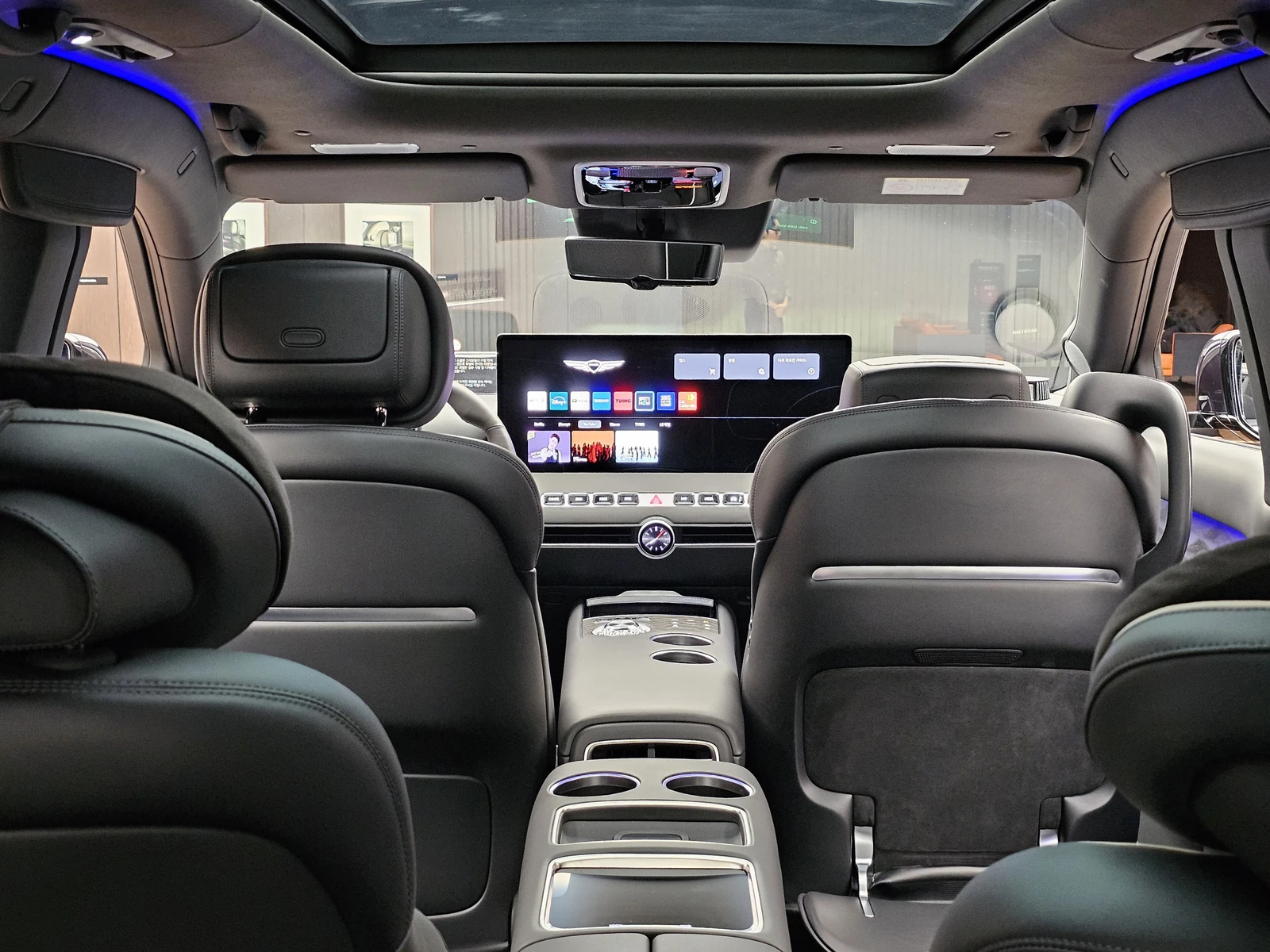

Genesis’s September engineering feature makes clear how much work went into a feature that sounds delightfully theatrical. While the GV90 is moving, the display operates in a lower 23.6-inch configuration. When parked, it can rise into its full format and switch into a media-focused mode.
Genesis says engineers mounted the mechanism to a structural crossbar to reduce vibration, tuned the motor and guides for quiet movement, and put the system through more than 100,000 test cycles. The company also says operating noise remained below 40 decibels in its testing across different temperatures.
Those are manufacturer-reported figures, not independent durability testing. But they reveal the design problem: the screen does not merely have to move. It has to move without feeling cheap.
A feature can be technologically impressive and still lose the room if it rattles, hesitates or calls attention to the machinery. The GV90 wants spectacle, but it wants the spectacle to arrive with good manners.
The Genesis GV90 Interior Is Built Around Choreography
The Genesis GV90 interior is built around more than the screen.
Genesis says the GV90 can be equipped with five Routines that coordinate display, lighting, scent, sound and climate. Upper Genesis GV90 Neolun versions add more ceremonial touches. The U.S. page highlights the Neolun Arch Gate door system, lounge-oriented seating and, on the Neolun First Edition, a private refreshment refrigerator and genuine wood flooring with radiant heating.
Read individually, those features can sound like an ambitious options sheet. Read together, they suggest a hospitality-inspired design strategy.
That description needs some distance because Genesis itself uses hospitality language heavily. The company frames its customer experience around Korean-inspired hospitality, and the GV90 marketing extends that vocabulary into the vehicle. The useful editorial question is not whether the label is elegant. It is whether the many small decisions actually create a coherent experience.
A hotel does not become luxurious because it owns a better lamp. The feeling comes from sequencing: how the door opens, where the eye lands, how sound behaves, whether the room anticipates what a guest needs, and whether the mechanics disappear quickly enough for comfort to take over.
That seems to be the GV90’s wager.
Genesis Is Building Experience Where Older Brands Have Heritage
The hospitality idea did not begin with the GV90.
Genesis House in New York combines a showroom with dining, a library, events and cultural programming. The current GV90 page invites visitors to experience the vehicle there through spring 2027.
That matters because it makes the hospitality thesis more than a convenient interpretation of one SUV. The car is arriving inside a system that has already been practicing the same behavior.
It also highlights Genesis’s particular disadvantage and opportunity.
Established luxury marques inherit decades of cultural memory. Genesis cannot manufacture that history on demand.
Experience design is more controllable.
A brand can decide how a showroom feels. It can decide whether a screen moves quietly, whether light and scent are coordinated, and whether the person explaining the car behaves less like a conventional salesperson and more like someone guiding a guest through the product.
None of that creates heritage. But it can create consistency. And consistency is one way a young luxury brand teaches people what its version of expensive is supposed to mean.
The Genesis GV90 Price Is Still One of the Missing Answers
The most important questions are still missing from the finished ownership experience.
Genesis has not announced U.S. GV90 pricing on its current consumer page. Some features are trim- or market-dependent. The vehicle is due in the United States in early 2027, so there is not yet a meaningful body of owner experience showing whether the quiet mechanisms stay quiet, whether the routines become habit, or whether the cabin’s many gestures add up to calm rather than complexity.
That uncertainty does not weaken the hospitality thesis. It defines the test.
Luxury technology is most convincing when it stops demanding attention. A screen can rise beautifully in a demonstration, but living with a flagship is mostly repetition: getting in, adjusting the temperature, waiting, arriving home.
The GV90’s features will have to survive the hundredth use, not just the first reveal.
The Bigger Luxury Bet
The pop-up theater will be the feature demonstrated first. The pattern around it suggests a larger wager.
Genesis is trying to build luxury from a sequence of hosting decisions: an entrance that feels deliberate, controls that recede when they should, materials that reward touch, an atmosphere that can change without becoming chaotic, and a retail experience that treats the vehicle as one part of a broader cultural space.
The screen is the trick you can photograph.
Hospitality is the harder thing to build.
For a brand with only a decade of standalone history, it may also be the more important one.
Genesis GV90 Neolun at Genesis Suji. Photo: Damian B Oh / Wikimedia Commons, CC BY-SA 4.0. Cropped for display. Source
