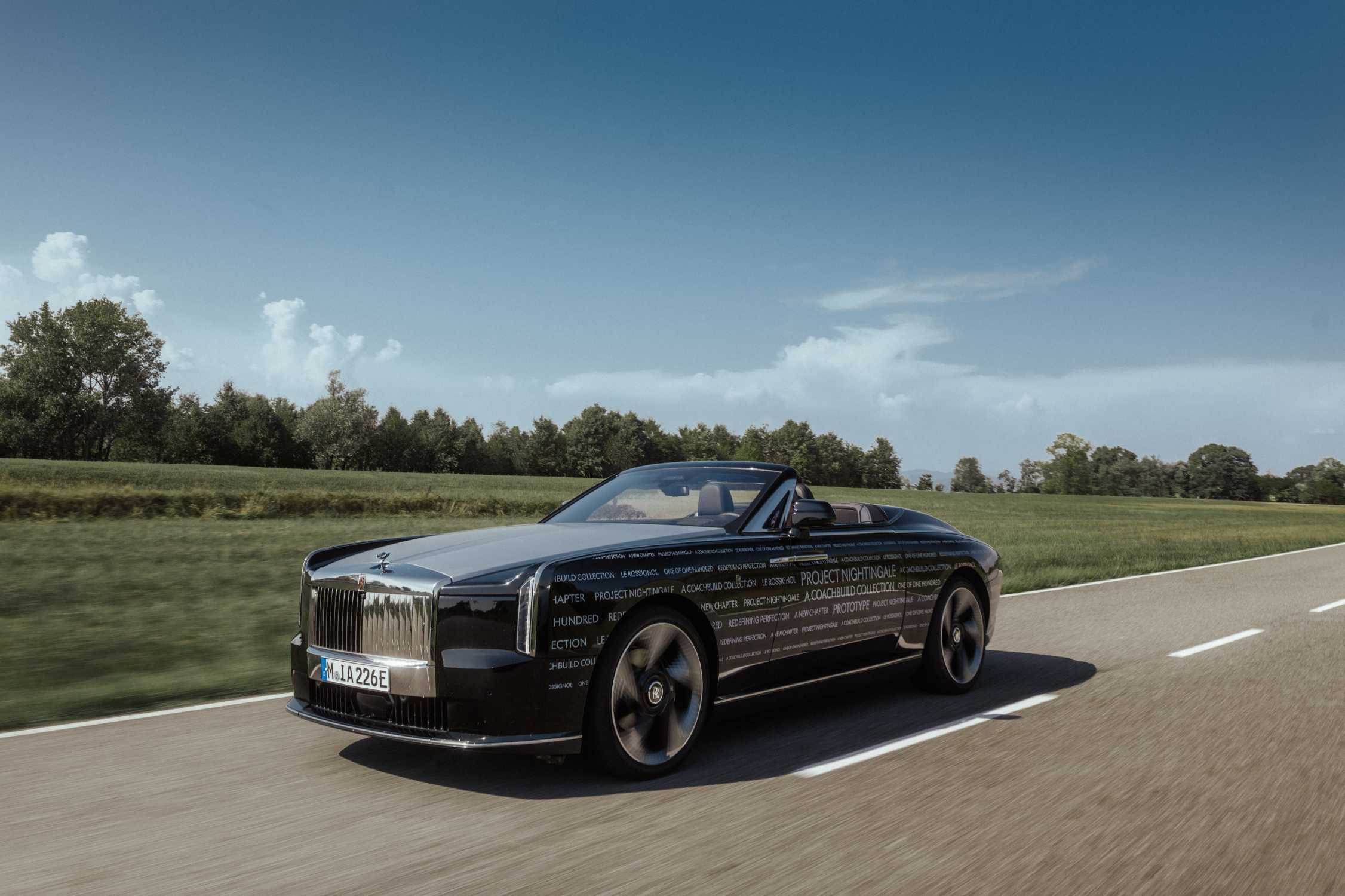
There is a new Rolls-Royce with a trunk called the Piano Boot.
It opens sideways on a cantilever mechanism, which is exactly the sort of sentence that makes sense once a car has moved beyond ordinary transportation and into the territory of commissioned object. Rolls-Royce plans to open and close it up to 15,000 times before Project Nightingale reaches clients.
That number is funny for about three seconds. Then it becomes revealing.
Project Nightingale is the first model in Rolls-Royce’s new Coachbuild Collection, an all-electric, open-top two-seater limited to 100 client cars. The company says its current development programme will total 350 collective weeks of testing across the programme before deliveries begin in 2028.
The mismatch is striking: 100 client cars, 350 collective testing weeks. Nightingale is supposed to look unusual. Its mechanisms are not allowed to feel unusual to operate.
How Rolls-Royce Tests Effortlessness
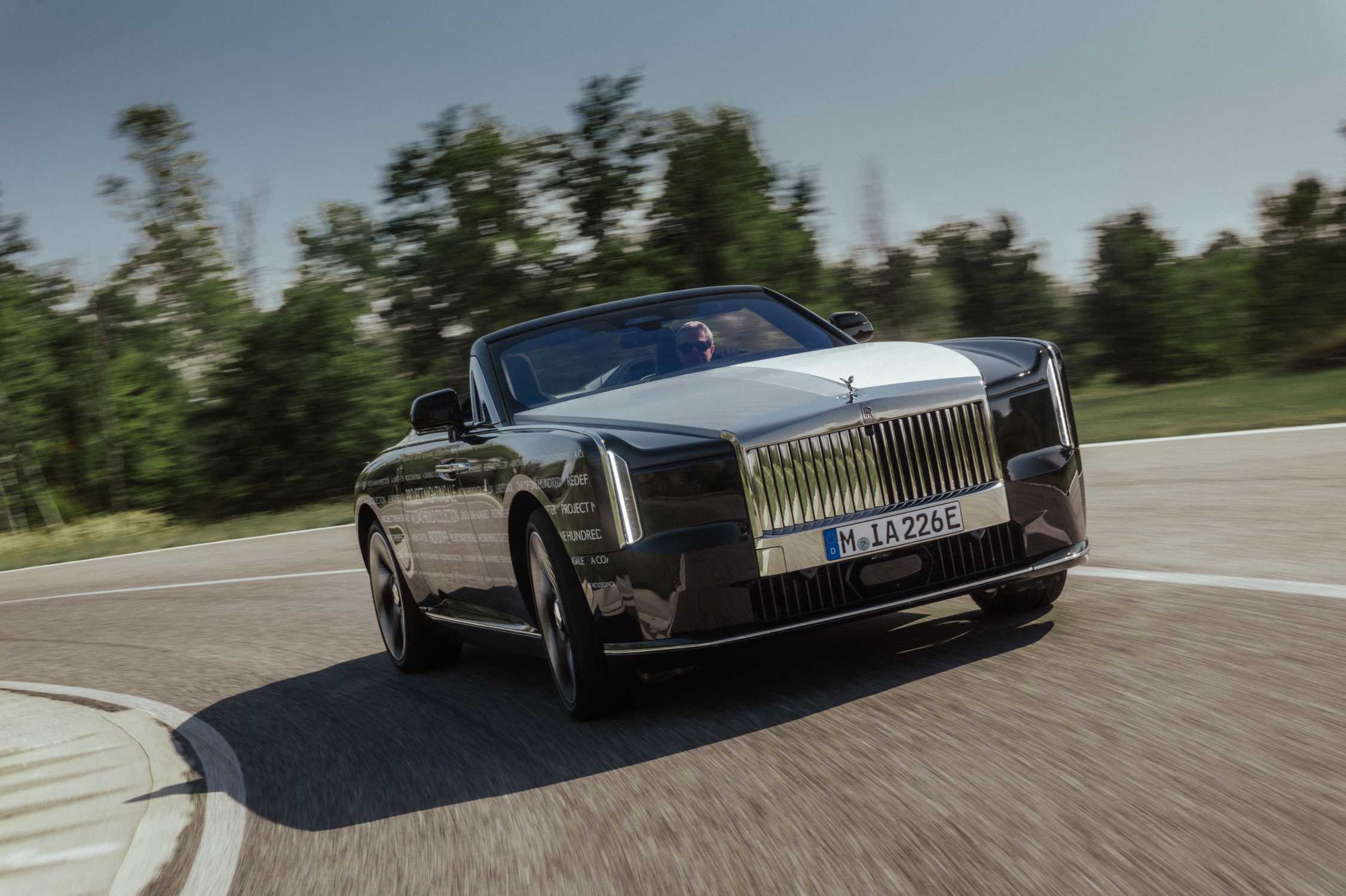
The testing begins on European roads and is intended to extend across the climates in which clients may actually use the car, including extreme heat, cold and altitude.
Before this road phase, static prototypes had already completed more than 1,430 hours of aerodynamic development, including digital simulation and wind-tunnel work. The next phase includes runs of up to 155 mph at a private high-speed facility.
The point is not simply to prove that Nightingale can go fast. Rolls-Royce says engineers will use those runs to suppress wind noise and preserve the quietness the company considers fundamental to the car.
That is a particularly awkward problem in an open-top EV. Remove an engine’s noise and the air becomes more noticeable. Remove the roof and the air becomes the whole assignment.
Rolls-Royce developed an electric wind deflector specifically for Nightingale. The roof uses sound-deadening material combining cashmere, fabric and high-performance composites, and will undergo 10 tests covering materials, operation and performance at temperatures up to 80°C.
Then there is the Piano Boot, patiently awaiting its 15,000th open-and-close cycle.
Most of those figures describe what Rolls-Royce plans to complete, not results it has already achieved. The company is telling us how much work it intends to do. It is not yet proving the outcome.
Rarity Does Not Make a Mechanism Less Fussy
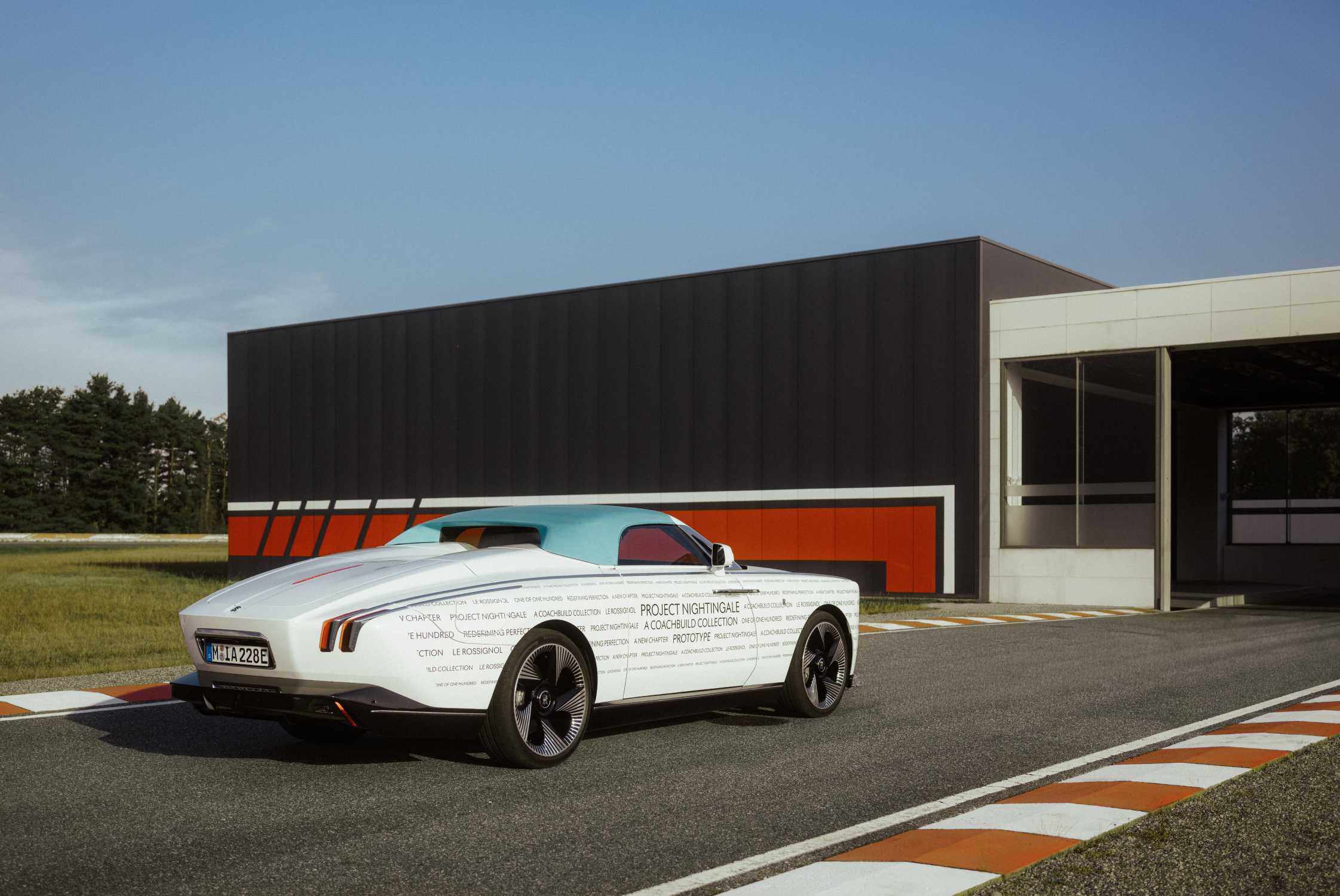
A car built for 100 clients faces a different production reality from a mass-market model, but rarity does not make a fussy mechanism less fussy. A theatrical mechanism still has to work every time.
That makes Nightingale interesting beyond its shape.
Its proportions draw on Rolls-Royce’s experimental EX cars of the 1920s. Its 24-inch wheels are monumental. The Piano Boot turns loading luggage into choreography. Even its name reaches back to Le Rossignol, a house Henry Royce built near his winter home on the French Riviera.
Yet the testing programme keeps returning to the unglamorous question underneath all of that: will the unusual thing work without asking the owner to think about it?
A wind deflector should quietly keep turbulent air out of the cabin. A roof made from unusual materials still has to operate in extreme heat. A side-opening trunk should perform its little ceremony consistently enough that the mechanism stops demanding attention.
That is the peculiar engineering challenge of ultra-luxury.
The visible object is allowed to be extravagant. The friction is not.
The Test Data Still Has to Become a Feeling
Rolls-Royce says instrumented data will not be the final judge. Experienced engineers will also assess whether Nightingale delivers the serenity and effortlessness the marque expects.
That is brand language, not independent proof that the finished car will achieve it. But it tells us what the tests are ultimately meant to support.
An engineering programme can define thresholds for temperature, noise or repeated operation. A luxury product has to translate those measurements into something less tidy: whether the mechanism feels resolved enough that the person using it does not have to negotiate with it.
Coachbuild gives Rolls-Royce room to make the object stranger, more personal and more theatrical. That freedom creates engineering problems of its own.
The Piano Boot is the cleanest example. A normal trunk does not need to justify itself aesthetically every time it opens. This one does. It also has to keep doing the job after the novelty has worn off.
When the Theater Stops Feeling Like Work
There is a temptation to read Project Nightingale as a numbers story because the numbers are so good.
One hundred cars. Three hundred and fifty collective weeks. More than 1,430 hours of aerodynamic development. Fifteen thousand trunk cycles.
The useful point is that scarcity does not eliminate ordinary expectations. It concentrates them.
A client can commission something with an unusual silhouette, an intricate roof and a trunk that opens like stagecraft. The moment any of those details becomes fiddly or fragile, the spectacle becomes work.
Rolls-Royce is spending an extraordinary amount of effort trying to make an extraordinary object feel unsurprising to use.
By the time the Piano Boot has opened for the 15,000th test cycle, that mechanism is not supposed to be the story anymore.
That may be the story.
Rolls-Royce Project Nightingale prototype during testing. Source: Rolls-Royce Motor Cars PressClub, 21 September 2026. Source