Wynn Al Marjan Island is the kind of project that can swallow a destination story whole: a $5 billion-plus integrated resort, 1,530 rooms and suites, 22 restaurants, lounges and bars, a theater, luxury retail, a private beach and a September 2027 opening target. The UAE’s General Commercial Gaming Regulatory Authority lists Wynn Al Marjan’s operating entity as a land-based gaming-facility licensee, an important part of why the project has attracted attention far beyond hotel circles.
But the more consequential number for Ras Al Khaimah may be 80%.
Today, roughly 13.3% of the emirate’s hotel inventory sits in the luxury five-star category, according to current reporting on RAK Tourism Development Authority chief executive Phillipa Harrison. By 2030, the goal is for about 80% of its keys to be premium. The total room count is meant to move from about 8,700 now toward roughly 16,000.
That makes Wynn the largest visible piece of a much bigger bet.
Ras Al Khaimah Is Building Luxury Before International Demand Fully Recovers
Ras Al Khaimah already has momentum. RAKTDA reported 1.35 million overnight visitors in 2025, up 6% year over year, while tourism revenue rose 12%. In the first half of 2026, the authority counted more than 670,000 visitors, its best first half on record.
Those figures are not a clean growth series. RAKTDA calls the 2025 figure “overnight visitors” and the H1 2026 figure simply “visitors,” so comparing them directly would overstate what the data can tell us.
The more useful tension sits underneath the totals. Domestic arrivals rose 47% in H1 2026 as regional disruption weighed on international travel. Skift reported occupancy at 49.3%, with guest nights and RevPAR down about 29%.
So Ras Al Khaimah is planning a much more expensive hotel market while the international demand it wants is still rebuilding.
Wynn Al Marjan Island Is the Inflection Point, Not the Whole Plan
Harrison has called Wynn an “inflection point,” but she has also framed it as part of a wider destination strategy. RAKTDA has pointed to Janu, Four Seasons, Fairmont, Taj and NH Collection among the brands supporting the next phase of growth. The National has also reported plans involving Nobu, W Hotels and The Unexpected, plus two new marinas.
Infrastructure is moving with the hotels. A VIP aviation terminal is planned. Road and transport links are expanding. Wynn’s beachfront, lagoon and offshore reef are already complete, while hotel fit-out continues.
RAKTDA describes its plan through five ideas: access, accommodation, attractions, amenity and awareness. The language is bureaucratic, but the logic is useful.
A luxury hotel can be built. A destination still has to make the trip feel worth taking.
Ras Al Khaimah’s Luxury Bet in Numbers
| Measure | Current / completed | Target / announced |
|---|---|---|
| Hotel inventory | About 8,700 keys | Roughly 16,000 by 2030 |
| Luxury five-star share today | About 13.3% of current hotel inventory | — |
| Stated premium-key target | — | About 80% of hotel keys by 2030 |
| 2025 visitation | 1.35m overnight visitors | More than 3.5m visitors annually by 2030 |
| Wynn Al Marjan Island | Under construction | 1,530 rooms and suites, planned 2027 opening |
The table makes the risk easier to see. Ras Al Khaimah is not nudging its positioning upward. It is trying to change the center of gravity of the hotel market. The authority’s language matters here: the current 13.3% figure refers to the luxury five-star category, while the 2030 goal is stated in terms of premium hotel keys. They are related signals, not proven identical classifications.
What Does Luxury Buy in Ras Al Khaimah?

Can Ras Al Khaimah become more expensive without becoming more generic? Harrison has said she wants the emirate to remain comparatively small and restorative, and has warned about sameness in destination marketing. That gives the luxury push a job beyond putting expensive names on buildings.
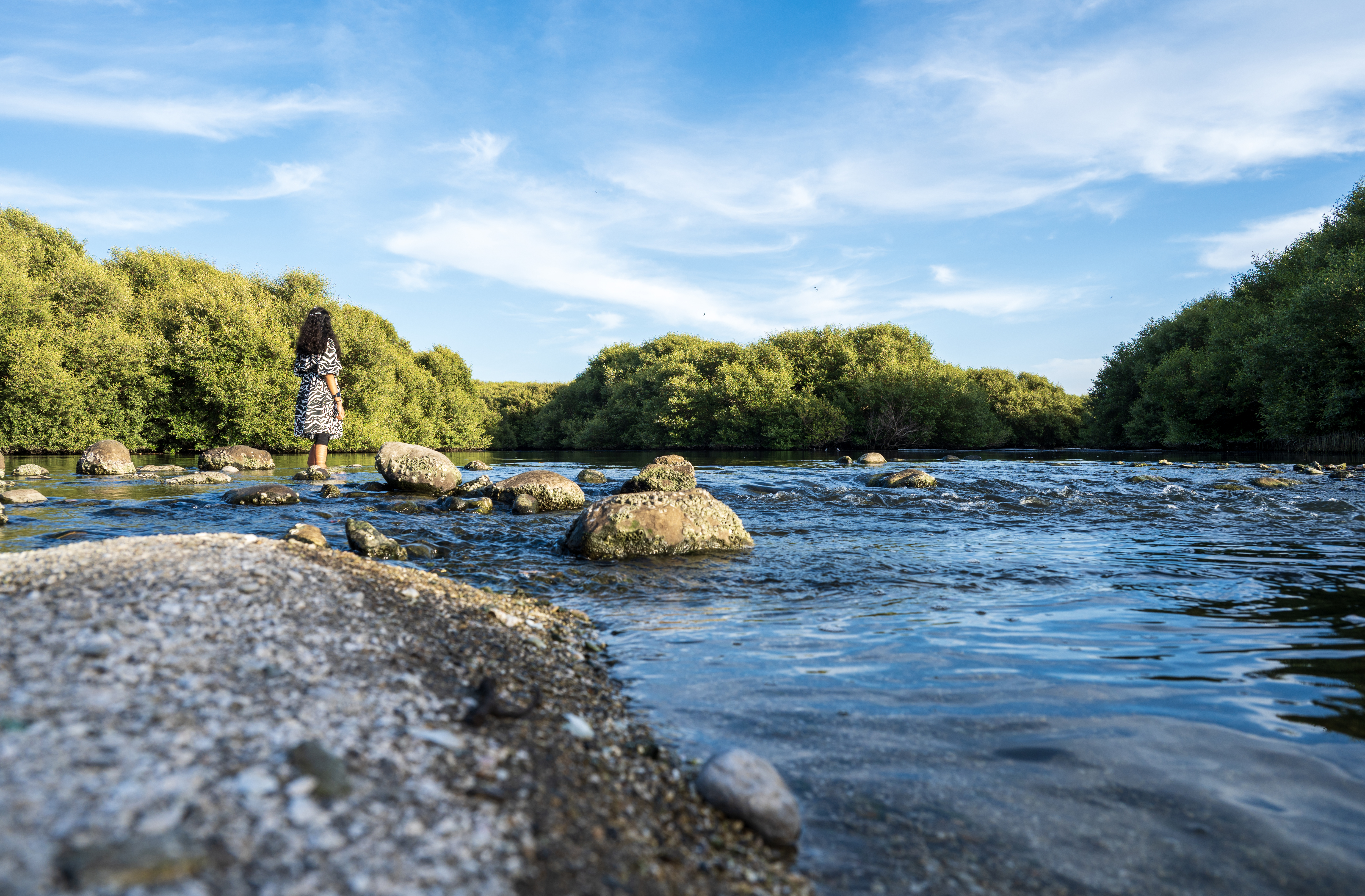
Ras Al Khaimah has coastline, mangroves, desert and the Hajar Mountains within one emirate. The planned SAIJ Mountain Lodge by Mantis pushes upscale hospitality onto Jebel Jais. Rotana’s upcoming Mangroves property leans into a different landscape and an events audience. Wynn brings scale and international recognition.
Those are not interchangeable versions of luxury, which may be the point.
If a higher room rate merely buys another polished lobby and another imported restaurant, Ras Al Khaimah becomes easier to compare with everywhere else. If it buys access to terrain, space, privacy and experiences that make sense specifically here, the higher positioning has a clearer reason to exist.
That is an editorial inference, not a promise about how unopened hotels will feel.
Luxury Brands Are Evidence, Not the Verdict
The easy version of this story is to count famous logos, point at Wynn and declare Ras Al Khaimah the Gulf’s next luxury hotspot.
The evidence is more interesting and less settled. International hospitality companies are committing brands and capital. Visitor numbers and tourism revenue have grown. The pipeline is substantial enough that transport and aviation infrastructure are being built around it.
But that does not prove the market will absorb a hotel base that is both much larger and dramatically more premium.
RAKTDA is now trying to rebuild international demand, including through a new Emirates partnership. Harrison has noted that international travelers generally stay longer than domestic short-break guests. That matters because construction is moving on a multiyear schedule while demand recovery is moving on a less obedient one.
Ras Al Khaimah’s real test is not how many luxury brands arrive. It is whether travelers stay longer, return, and still understand why they came here rather than somewhere else.
Photo: Tashmetova808 / Wikimedia Commons, CC BY-SA 4.0. Source
