
BMW Confirmed the First Electric M3. Here’s What’s Actually Official.

Share

BMW has finally used the words enthusiasts have been circling for months: fully electric BMW M3.
That sounds like a simple product announcement. It is not quite one.
On October 2, BMW said its Munich plant will build the first fully electric M3, calling it the first high-performance model to use BMW M Neue Klasse technology. BMW also says the Munich plant will produce only fully electric vehicles from 2027.
So the name is official. The production site is official. The electric-M architecture is increasingly clear.
A lot of the numbers floating around it are not.
BMW M has separately detailed the technology developed for its electric Neue Klasse high-performance cars. The company says the architecture uses four electric motors, one at each wheel, controlled through BMW M Dynamic Performance Control.
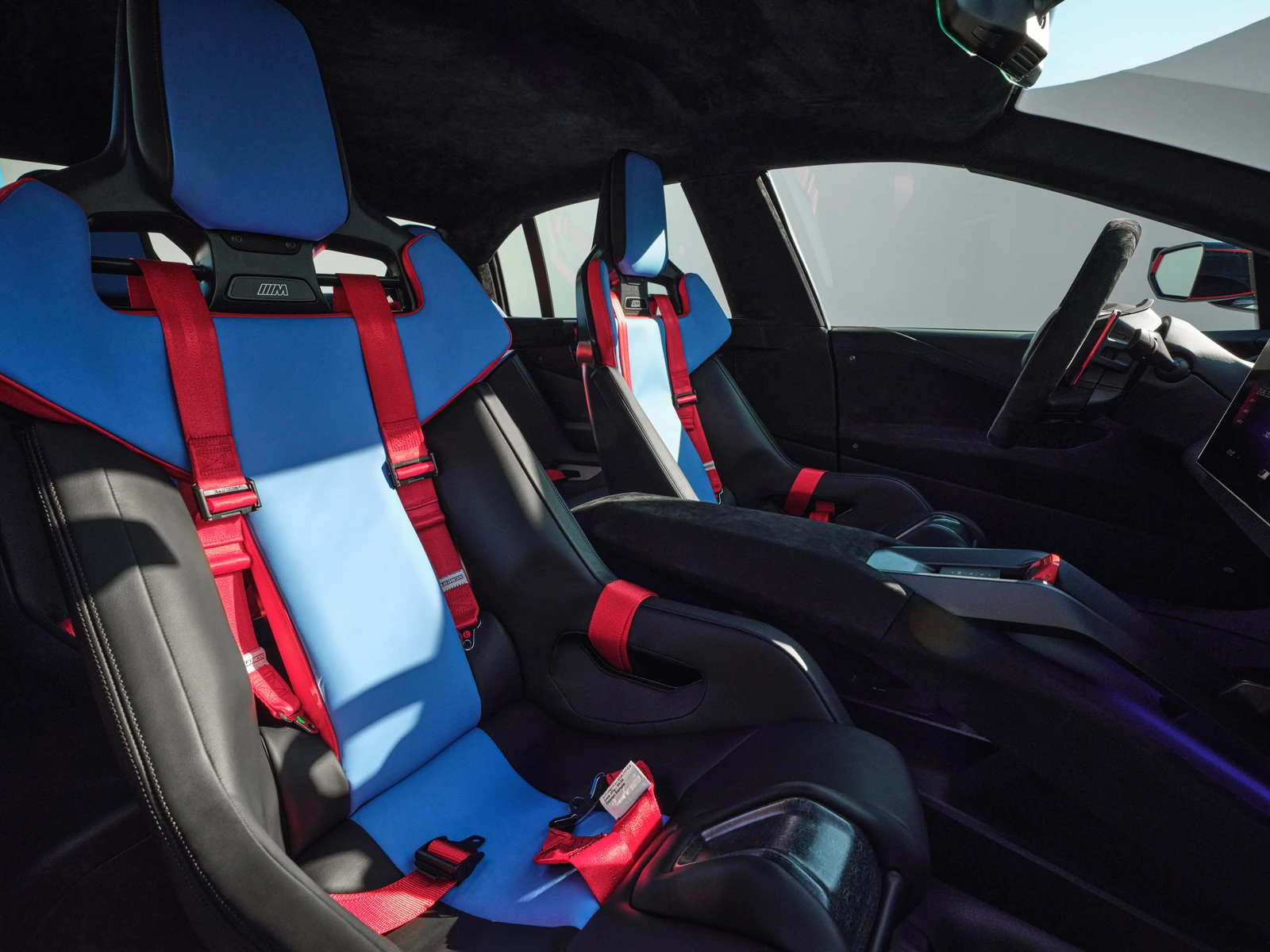
BMW’s M Concept Neue Klasse uses an 800-volt architecture and a high-voltage battery with more than 100 kWh of energy capacity, but BMW has not yet published those figures as final production-M3 specifications.
Those details matter. The scope matters more.
BMW presents them as part of its M Neue Klasse concept and electric high-performance architecture. It has not published a final production specification sheet for the electric M3.
That makes the four-motor architecture far more firmly established than the horsepower figures, range estimates and price guesses already circulating around the production M3.
BMW has not yet published the production M3’s final output, EPA range, U.S. price, curb weight or exact U.S. on-sale date. BMW M says the first models using Neue Klasse technology are planned for market introduction in 2027, while further availability details remain undisclosed.
The more interesting decision may be the badge.
BMW could have created a separate electric performance name and protected “M3” as a combustion-era identity. Instead, it is explicitly calling this car an M3.
That creates a much bigger burden than simply being quick.
For decades, the M3 name has carried expectations about chassis balance, repeatable performance and driver involvement. BMW M’s electric engineering pitch is clearly aimed at that problem: wheel-specific motor control, high recuperation, racetrack capability and software intended to make four motors behave as one performance system.
Whether the production car actually feels like an M3 is a question nobody outside BMW can answer yet.
But BMW has now answered a different one.
The electric car is not being treated as an M-adjacent experiment. It is being asked to inherit one of the company’s most important performance names.
For now, that is the real headline.
The first electric M3 is official. The giant spec sheet is not.
Hero image: BMW Group